
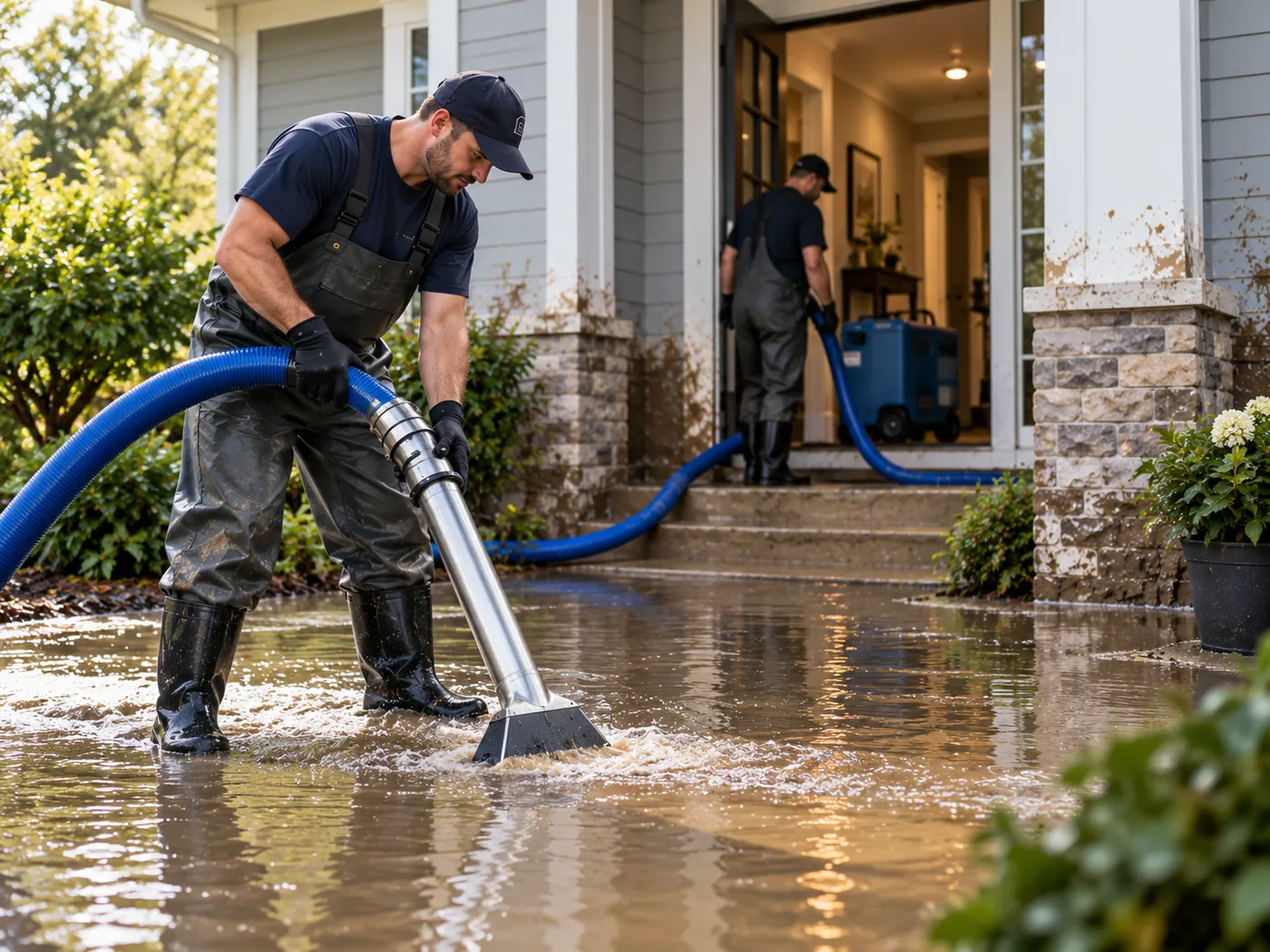
Water damage restoration combines source control, water removal, moisture mapping, controlled drying and verification so wet building materials are treated beyond the visible surface.
What does water damage restoration include?
Burst pipes, leaking roofs, overflowing baths, appliance failures and stormwater can spread moisture into walls, floors and timber. We assess the affected materials, remove standing water, set up professional drying equipment and monitor moisture until the structure reaches safe levels. Clear documentation can also support an insurance claim.
When should you call?
- Standing water or wet carpet after a leak
- Water marks spreading across ceilings or walls
- Swollen timber, skirting or cabinetry
- Musty odours after a plumbing or storm event
How the process works
- 01Identify the source and safety risks
- 02Extract free water and protect contents
- 03Map moisture in floors, walls and adjoining rooms
- 04Install air movers and dehumidification
- 05Monitor readings and verify drying
Why measured restoration matters
Water can travel beyond the visible wet area into underlay, wall cavities, timber, subfloors and adjoining rooms. The restoration plan is based on source, contamination, material type and moisture readings rather than surface appearance alone. That helps reduce unnecessary removal while identifying materials that cannot be safely retained.
Water Damage Restoration FAQs
How soon should water damage restoration start?
As soon as it is safe to do so. Early extraction and moisture assessment can reduce the amount of water that migrates into underlay, walls, timber and adjoining rooms.
Can wet walls dry without being removed?
Sometimes. The decision depends on the material, contamination, how wet it is and whether air can reach the affected cavity. Moisture readings guide whether controlled drying or removal is more appropriate.
Do you provide moisture readings for insurance?
Site documentation and moisture readings can be provided to support communication with insurers, strata managers and other trades involved in the claim.
Do you cover Sydney after hours?
The emergency line is available 24/7 across Sydney and the Central Coast, subject to technician location, traffic and current emergency demand.