

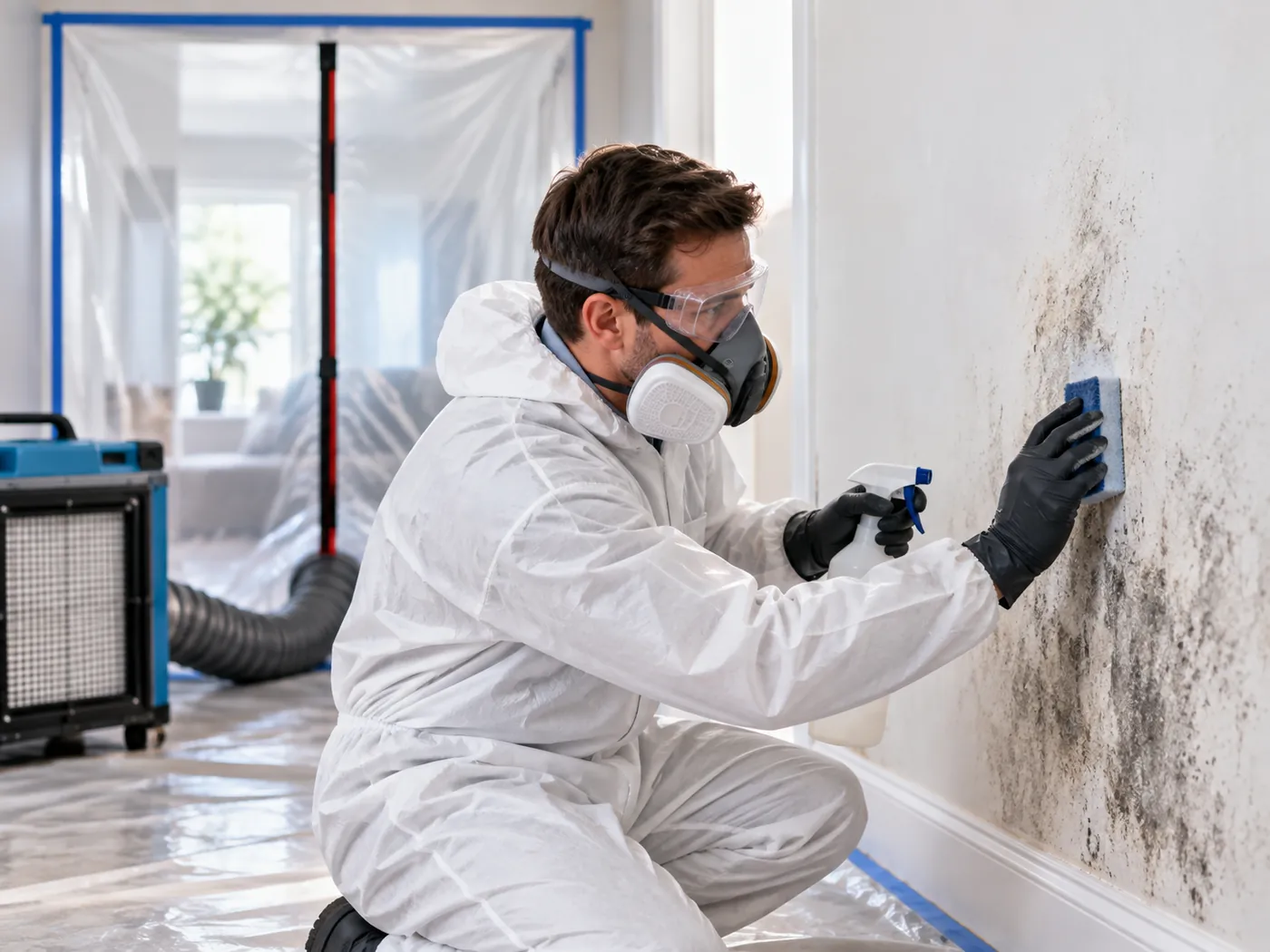
Mould remediation combines moisture investigation, containment, controlled cleaning or removal and HEPA filtration to reduce cross-contamination and address the conditions supporting growth.
What does mould remediation & cleaning include?
We assess the affected area, define a practical scope of work and use environmental controls to limit cross-contamination. Cleaning methods are selected for the surface and level of impact. HEPA filtration, controlled removal and detailed cleaning may be combined with moisture investigation so the underlying cause is not ignored.
When should you call?
- Visible mould is spreading
- A persistent musty smell follows a leak
- Mould returns after surface cleaning
- Growth is present in wall, ceiling or subfloor materials
How the process works
- 01Find and address moisture sources
- 02Define the affected work zone
- 03Set containment and HEPA control where required
- 04Clean or remove impacted materials using appropriate methods
- 05Complete detailed cleaning and moisture checks
Why measured restoration matters
Water can travel beyond the visible wet area into underlay, wall cavities, timber, subfloors and adjoining rooms. The restoration plan is based on source, contamination, material type and moisture readings rather than surface appearance alone. That helps reduce unnecessary removal while identifying materials that cannot be safely retained.
Mould Remediation & Cleaning FAQs
Can I just spray mould with bleach?
Surface treatment alone may not address growth in porous materials or the moisture problem that allowed mould to develop. The underlying water source and affected material need assessment.
Does mould always mean a wall must be removed?
No. The correct method depends on the material, extent of growth, contamination and whether the surface can be effectively cleaned.
What does HEPA filtration do?
HEPA filtration helps capture fine airborne particles in a controlled work area and supports containment during remediation work.
Can mould return after remediation?
It can if the moisture source is not corrected or the area becomes persistently damp again. Moisture management is a core part of long-term control.