

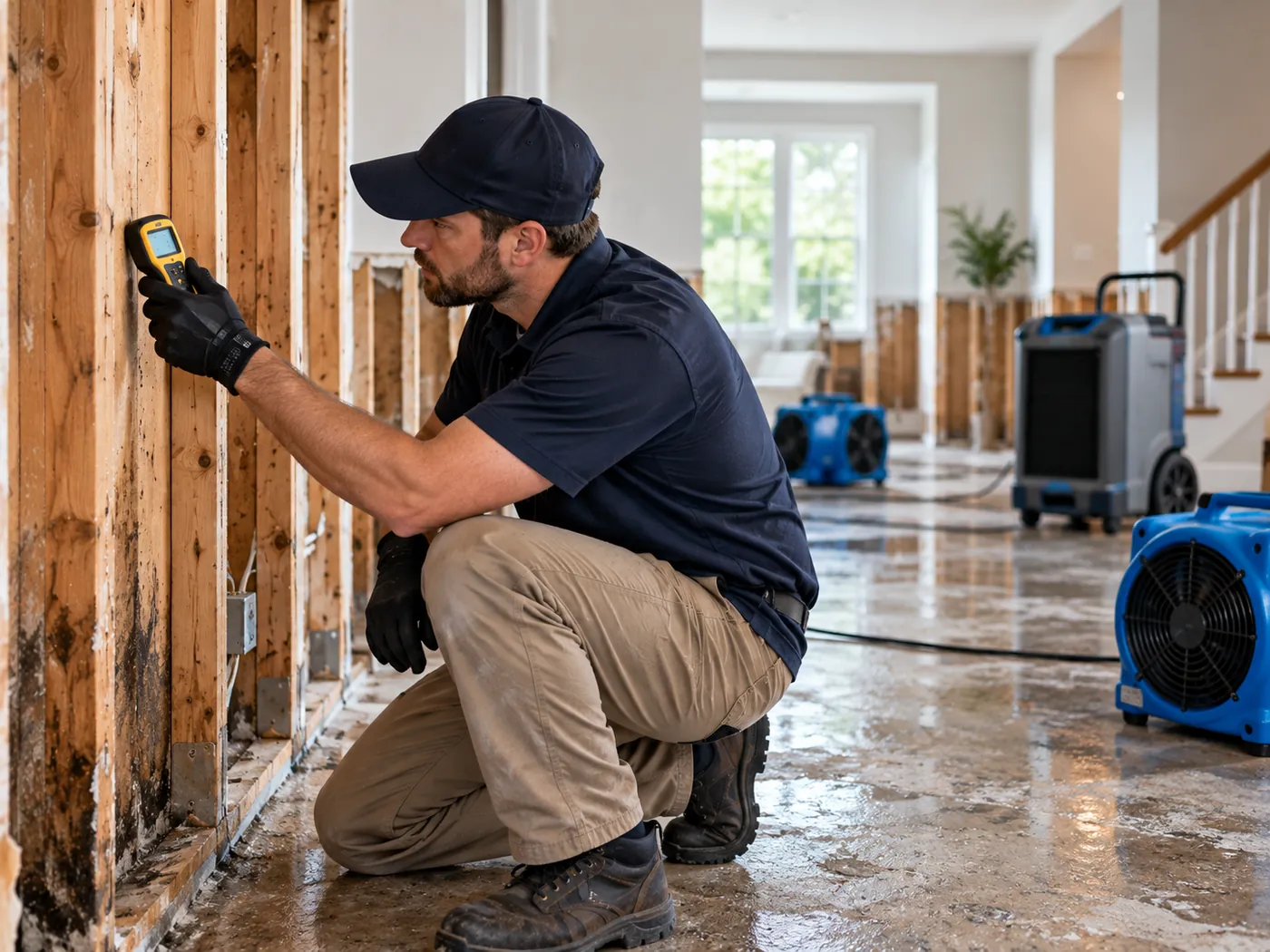
Structural drying uses measured air movement and dehumidification to reduce moisture retained inside timber, subfloors, concrete, walls and ceilings.
What does structural & timber drying include?
We assess concrete, plaster, skirtings, ceilings, subfloors, floating floors and solid timber. Air movers and dehumidifiers are positioned for the building layout, then moisture readings are tracked over time. This measured approach helps reduce swelling, odours, microbial growth and unnecessary removal of materials.
When should you call?
- Timber boards are swelling or cupping
- Subfloors remain damp after visible water is gone
- Concrete or walls still read wet
- A leak affected multiple construction layers
How the process works
- 01Establish baseline moisture readings
- 02Identify material assemblies and airflow limits
- 03Position drying equipment
- 04Track progress at repeat monitoring points
- 05Confirm materials are approaching appropriate dry standards
Why measured restoration matters
Water can travel beyond the visible wet area into underlay, wall cavities, timber, subfloors and adjoining rooms. The restoration plan is based on source, contamination, material type and moisture readings rather than surface appearance alone. That helps reduce unnecessary removal while identifying materials that cannot be safely retained.
Structural & Timber Drying FAQs
How long does structural drying take?
There is no fixed time. Material type, depth of wetting, room conditions and access to the moisture all affect drying. Progress is checked with repeat measurements rather than a calendar alone.
Can solid timber floors be saved?
Sometimes. The decision depends on contamination, swelling, finish, installation method and how quickly drying starts.
Why use dehumidifiers with air movers?
Air movement encourages evaporation from wet materials while dehumidification removes moisture from the air so evaporation can continue efficiently.
Do you dry subfloors?
Yes, where access and site conditions allow. Subfloor moisture can remain after the room above looks dry, so it may need separate airflow and monitoring.