

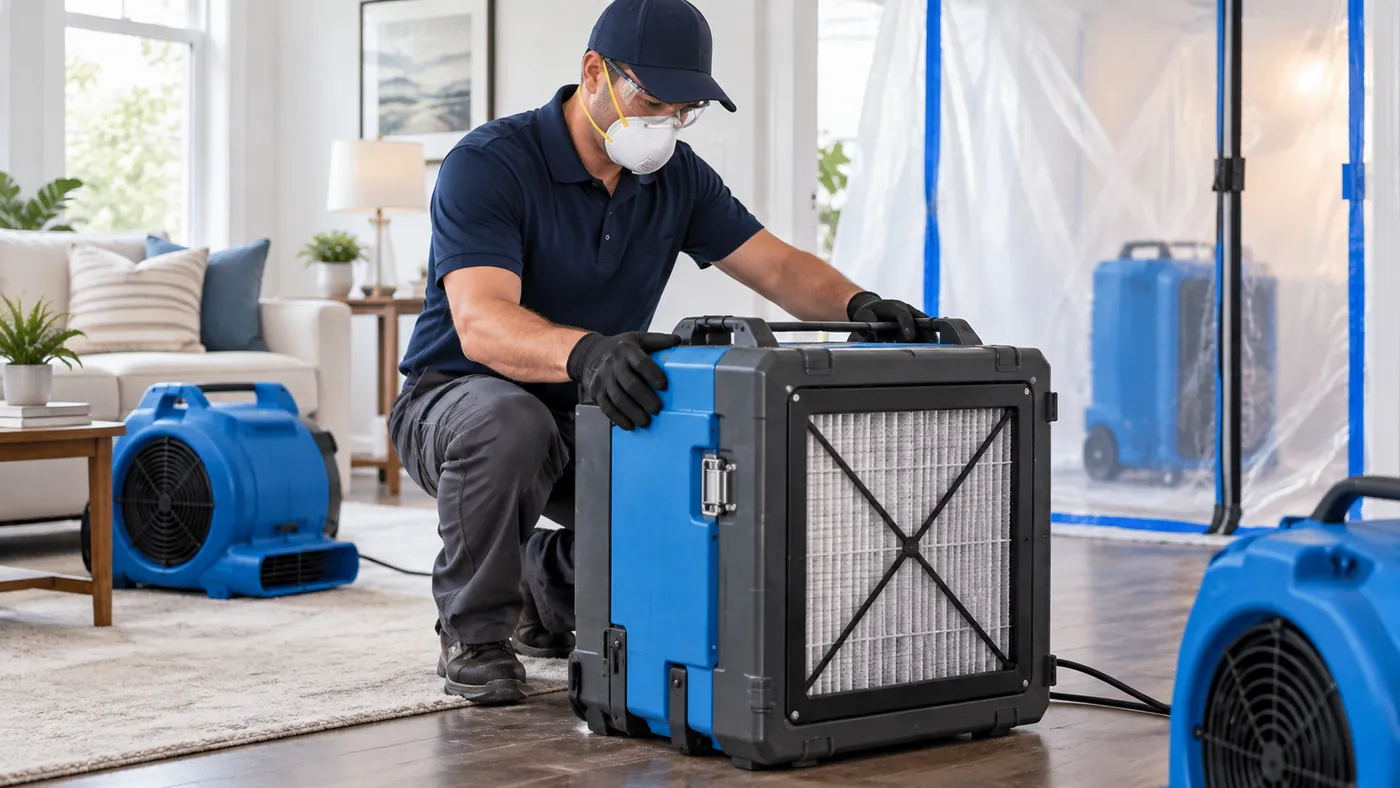
HEPA air purification filters fine airborne particles and supports cleaner controlled work zones during mould remediation, demolition and restoration activities.
What does hepa grade purification include?
Air filtration devices are positioned according to the size and layout of the affected zone. They may be used to maintain cleaner air during remediation, support containment or reduce airborne dust created during controlled removal. Equipment selection and run time are based on the actual site conditions.
When should you call?
- Mould remediation needs containment
- Dust is generated during controlled removal
- A restoration zone is occupied nearby
- Fine airborne particles need ongoing filtration
How the process works
- 01Define the work zone
- 02Select filtration capacity for the room volume
- 03Position equipment for effective airflow
- 04Operate during the relevant work phase
- 05Replace filters and clean equipment as required
Why measured restoration matters
Water can travel beyond the visible wet area into underlay, wall cavities, timber, subfloors and adjoining rooms. The restoration plan is based on source, contamination, material type and moisture readings rather than surface appearance alone. That helps reduce unnecessary removal while identifying materials that cannot be safely retained.
HEPA Grade Purification FAQs
What does HEPA mean?
HEPA refers to high-efficiency particulate air filtration designed to capture very fine particles from moving air.
Does an air scrubber remove mould from walls?
No. Air filtration supports the work environment but affected building materials still need appropriate cleaning, treatment or removal.
How long should HEPA filtration run?
Run time depends on the work being performed, room volume, containment and site conditions.
Can HEPA filtration help during demolition?
Yes, it can help manage airborne dust and fine particles when used as part of a controlled work plan.